
Key takeaways
- Insist on named engineers and reference calls in your domain
- Require your repositories and IP from day one
- Prefer phased discovery over fixed bids on vague scope
- Document daily update rhythm and post-launch support before signing
- Ask how AI work is scoped and priced explicitly
- Use a paid pilot to de-risk larger commitments
Article content
Choosing a development partner is a bet on your roadmap
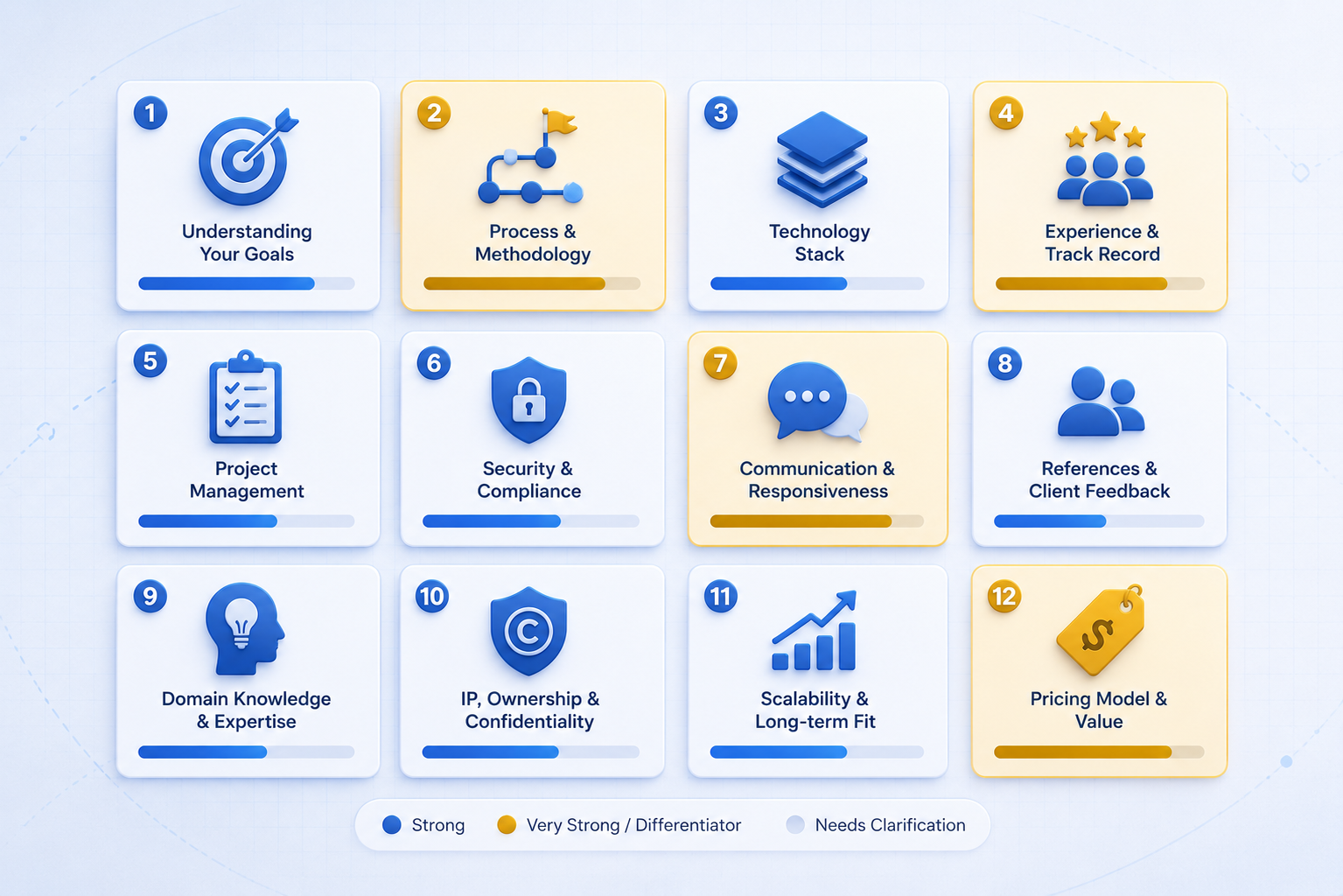
The right software partner accelerates years of product work; the wrong one burns runway and morale. US and UK startups evaluating agencies, offshore teams, or boutique Django shops face the same twelve questions - whether they ask them aloud or not. SparkScribe encourages founders to use this framework before signing statements of work.
1. Who exactly will work on our account?
Named engineers, roles, and allocation percentages matter. Avoid contracts allowing unlimited substitution without notice. Meet technical leads before kickoff.
2. Can we speak with reference clients in our domain?
Portfolio logos are marketing; reference calls reveal communication, crisis handling, and post-launch support. Ask references about surprises, not only successes.
3. How do you handle discovery when requirements are fuzzy?
Fixed bids on vague scope predict change-order conflict. Strong partners propose phased discovery with tangible outputs - backlog, wireframes, architecture notes - before major build commits.
4. What does your sprint cadence look like?
Expect regular demos, written release notes, and visible boards. If a vendor resists transparency tools, assume transparency problems later.
5. Where does our code live and who owns IP?
Repositories should be in your organization from day one with full IP assignment. Escrow is poor substitute for ownership.
6. How is quality enforced?
Ask about test expectations, code review rules, staging environments, and who approves production deploys. No written quality standards means no standards.
7. How do you stay current across time zones?
Async updates supplement live sync for decisions. Document morning/EOD update windows and call cadence before signing.
8. How do you price AI features?
Model costs, data preparation, and evaluation work should appear explicitly. Beware vendors treating AI as a magic upsell line without delivery detail.
9. What happens after launch?
Support SLAs, bug severity definitions, and retainer options should be clear. Launch day is not project end for serious products.
10. How do you manage security and access?
SSO to your tools, least-privilege credentials, and incident notification procedures belong in the conversation early - especially for B2B handling customer data.
11. What is your honest mismatch profile?
Best partners admit when they are wrong fit - wrong stack, too small a team, timeline unrealistic. Sales teams that say yes to everything create downstream pain.
12. Can we start with a small paid engagement?
Pilot sprints or technical audits de-risk larger contracts. Vendors confident in delivery welcome this; those who refuse may hide capability gaps.
Using the framework
Score each answer green, yellow, or red. Multiple yellows on communication, ownership, or quality warrant caution regardless of attractive pricing. Compare two or three finalists with the same questions - differences surface quickly.
SparkScribe optimizes for long-term US and UK startup partnerships on Django and AI products. Review case studies, explore engagement models, and introduce your roadmap when you are ready for reference calls and a pilot proposal.
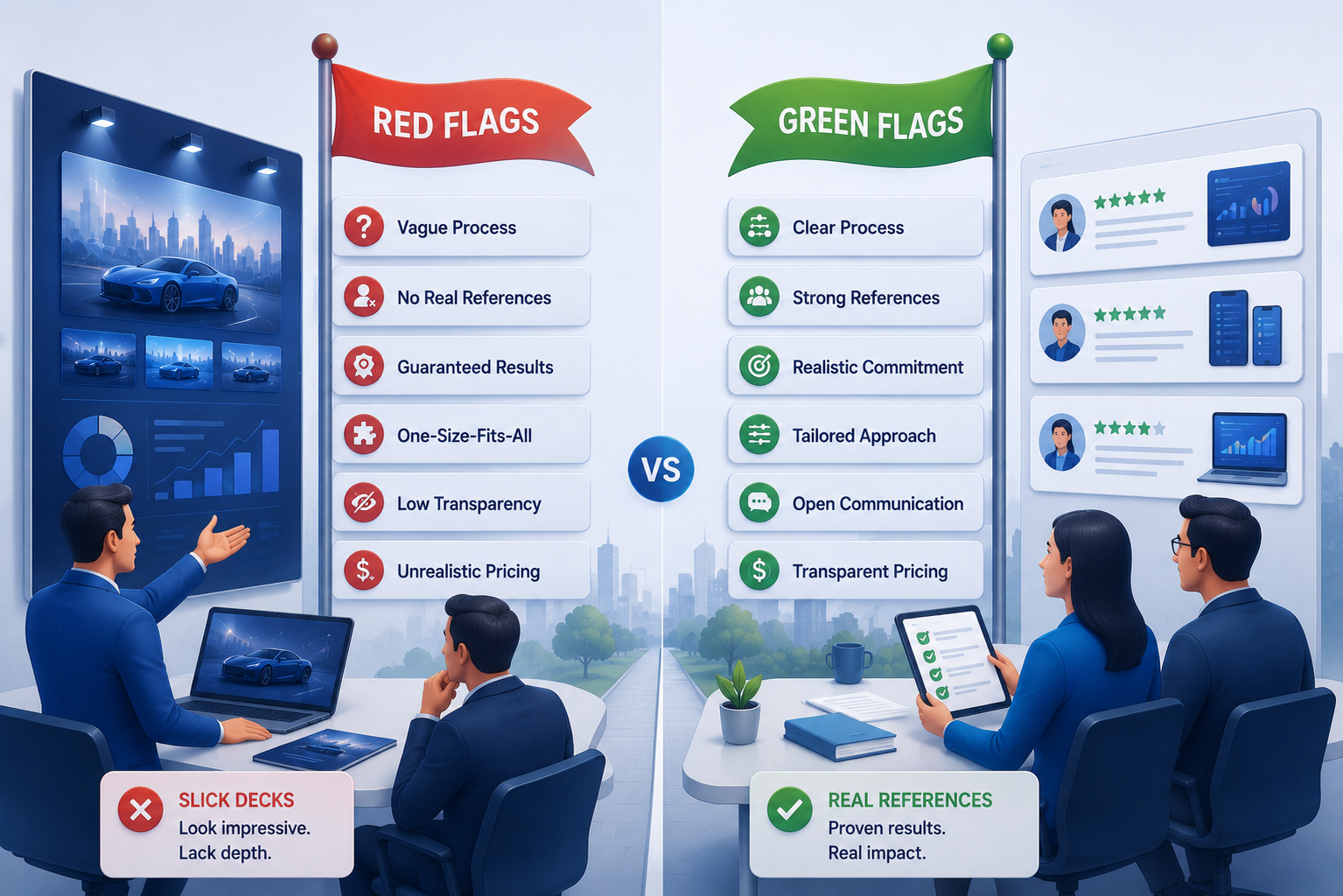
Red flags worth walking away from
Vendors who refuse reference calls, will not put code in your repositories, or pressure same-day signature on large contracts deserve skepticism. Watch for estimates with no assumptions section - every real project has assumptions. If communication during sales is slow or vague, delivery rarely improves after deposit.
Conversely, partners who push back on unrealistic timelines, ask detailed discovery questions, and propose phased investment demonstrate maturity. Founders sometimes misread caution as lack of enthusiasm; it is often the opposite.
After you choose: making the partnership work
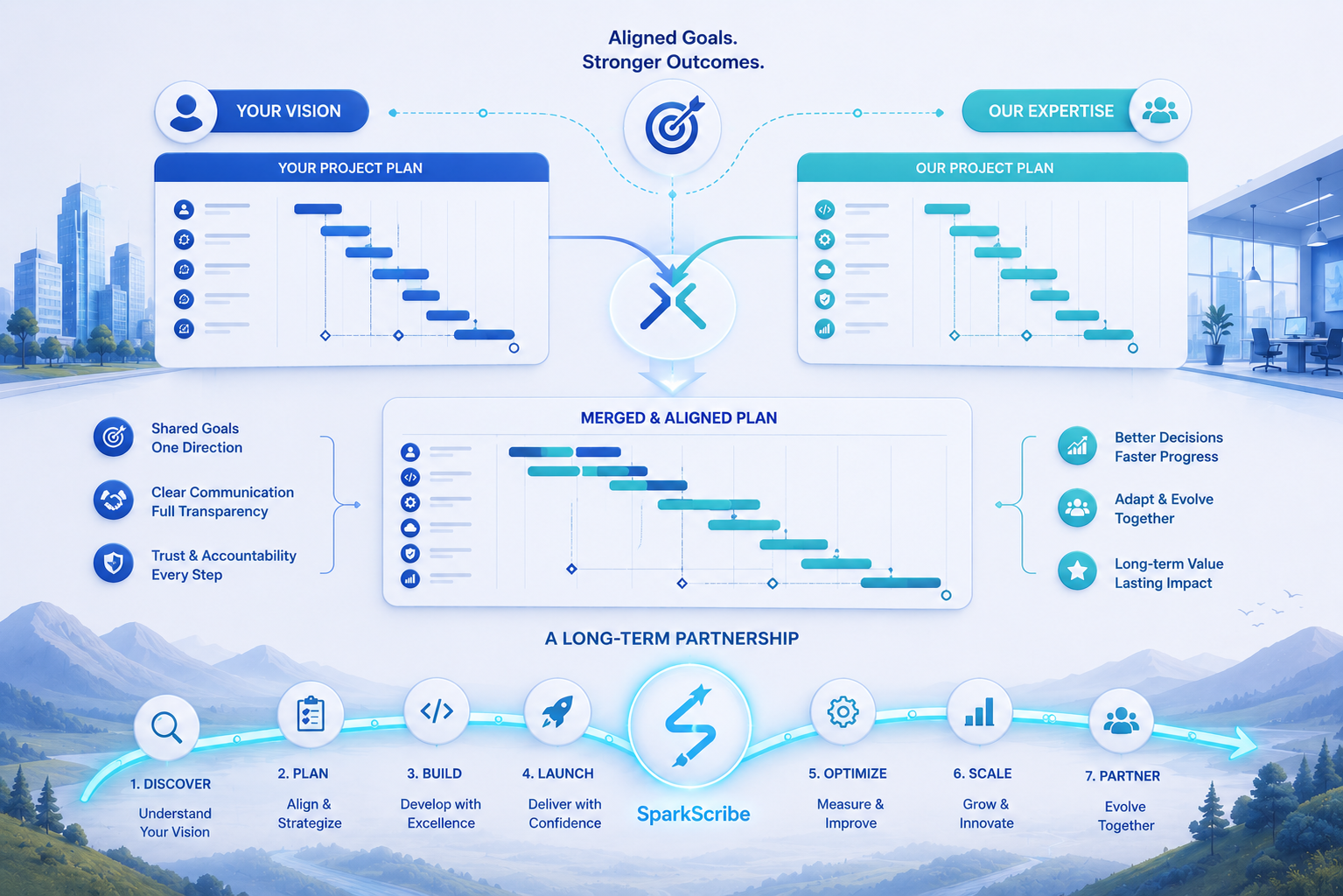
Evaluation continues after signing. First sprint retros should address communication gaps honestly. Share customer feedback, revenue context, and strategic pivots - partners operating in the dark optimize locally, not holistically. Quarterly roadmap reviews align engineering capacity with business priorities and prevent surprise descoping conversations.
The twelve questions are a starting point, not a one-time checklist. Revisit them at major milestones - post-MVP, pre-Series A, first enterprise deal - when requirements for security, scale, and compliance jump materially.
Building a shortlist efficiently
Start with five to seven candidates from referrals and case-study relevance, narrow to three after initial calls, run reference checks on two finalists, then pilot with one. Spending eight weeks in endless evaluation burns runway; spending two days on a single sales call misses red flags. The framework above balances diligence with momentum - the same balance SparkScribe tries to strike in delivery once you choose us.
Documenting decisions for your board and investors
Capture why you chose a partner, what alternatives you rejected, and what success looks like at ninety days. Investors appreciate disciplined vendor selection narratives during diligence - especially when capital efficiency and technical risk are board-level topics alongside growth metrics.
Keep a simple scorecard spreadsheet - questions as rows, vendors as columns, notes from reference calls in cells - so decisions remain explainable months later when new stakeholders join your leadership team.
Further reading
Partner evaluation scorecard
| Question theme | Green flag | Red flag |
|---|---|---|
| Team | Named engineers + leads | Anonymous rotating staff |
| Ownership | Your repos from day one | Vendor-hosted code only |
| Process | Weekly demos + boards | Opaque status emails |
| Quality | Written test/review standards | We will QA at the end |
| Fit | Honest scope pushback | Yes to everything |
How long should evaluation take?
Two to four weeks for finalists including reference calls and a scoped pilot proposal is reasonable for meaningful contracts.
Is cheapest ever best?
Rarely - evaluate total cost including your time, rework risk, and delayed launch revenue.
Should we require technical tests?
Paid small real-work pilots beat free spec assignments that waste vendor and founder time.
What should SparkScribe provide in evaluation?
Named team intro, relevant case studies, reference contacts, discovery proposal, and clear engagement options - ask us directly.
Twelve good answers beat one low hourly rate. The partner you choose will shape your product architecture and engineering culture for years.
Ready to compare partners? Start with our twelve-question worksheet on a intro call - we will answer transparently, even when we are not the fit.