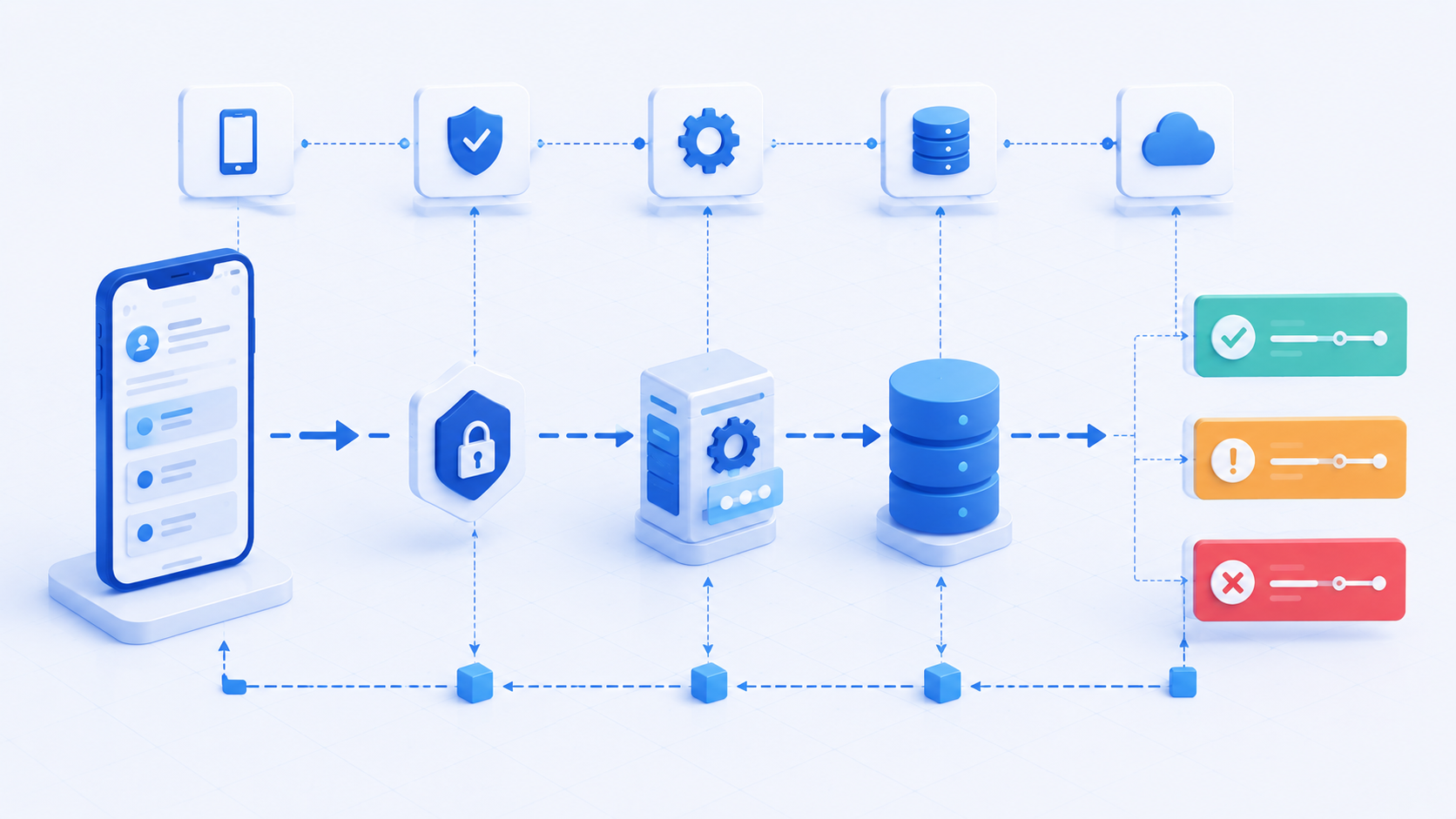
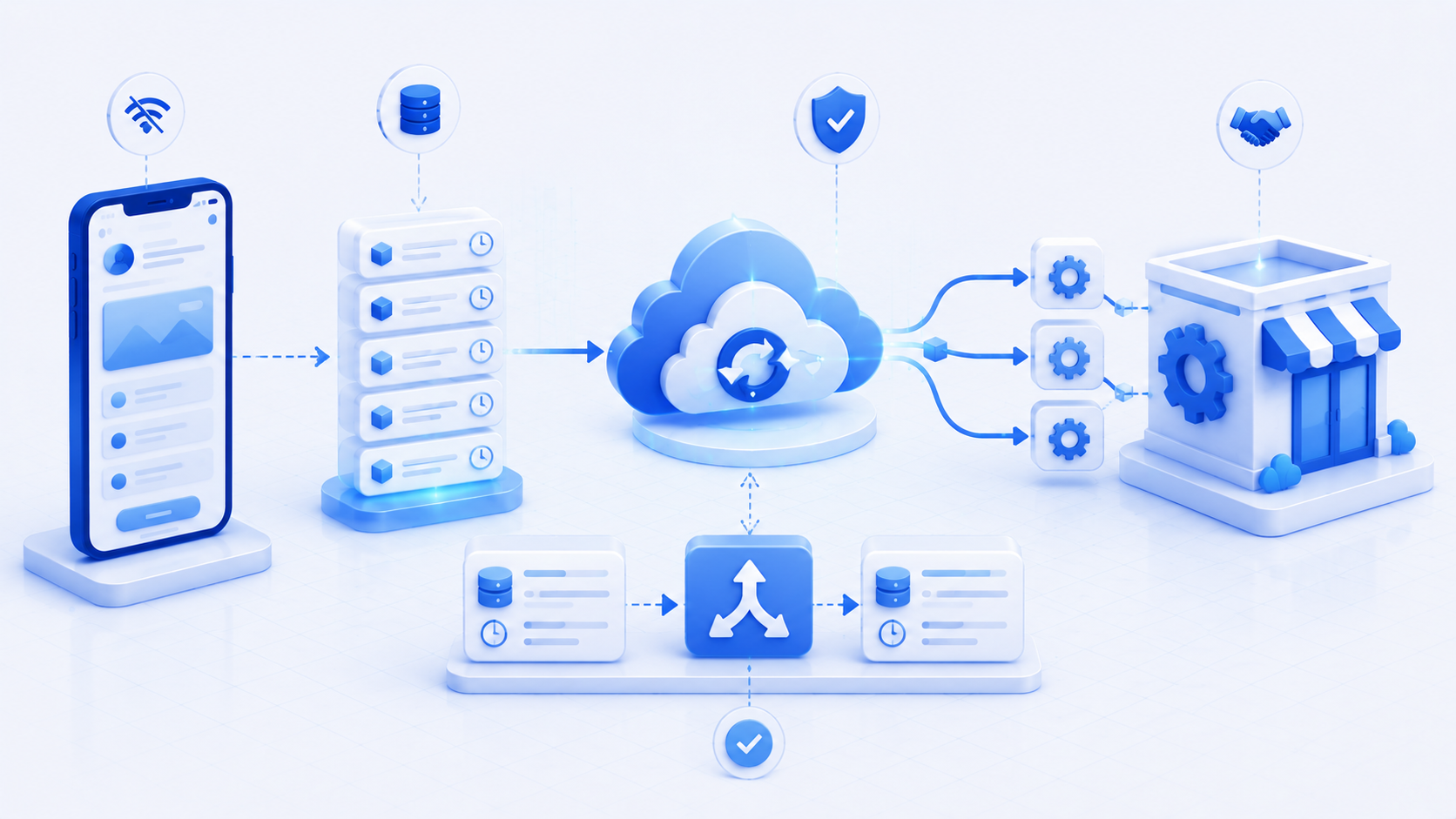
Key takeaways
- Treat OpenAPI as source of truth generated from code
- Scope tokens and rate limit per partner client
- Use cursor pagination and control payload size for mobile
- Implement idempotency keys on create and payment endpoints
- Provide sandbox environments and stable error codes
- Never ship silent breaking changes to integrators
Article content
APIs are product surfaces - especially for mobile and partners
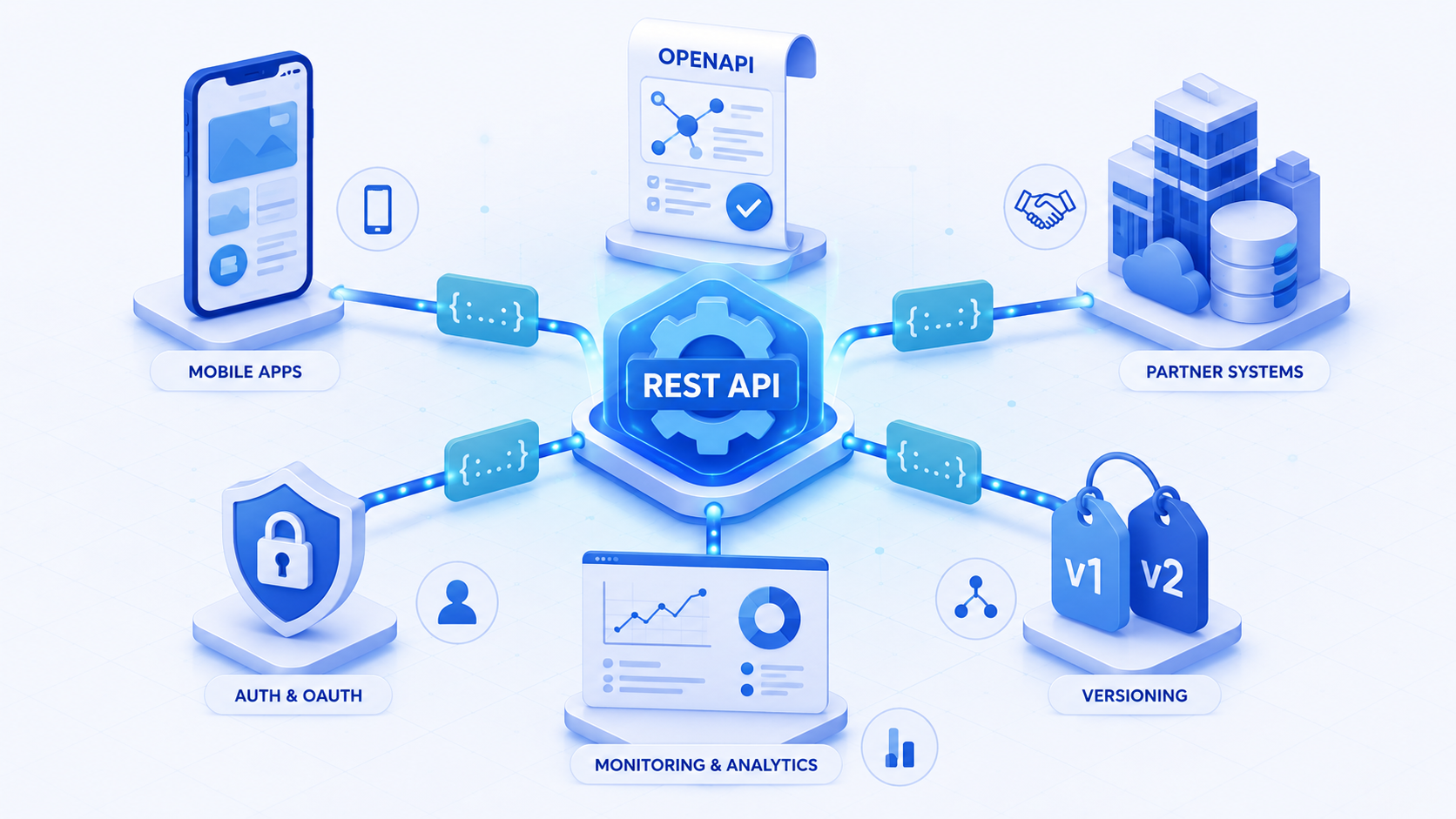
Your REST API is not an implementation detail hidden behind a web UI. Mobile apps, partner integrations, and future client platforms depend on stable contracts, predictable errors, and security that survives outside the browser same-origin protections. SparkScribe builds Django REST Framework APIs for US and UK B2B products; this checklist captures what we verify before calling an API partner-ready.
Contract clarity and versioning
Publish OpenAPI schemas generated from serializers - not manually maintained docs that drift. Version URLs or use explicit Accept headers; never silently change field types on partners. Deprecation timelines belong in responses and changelog communications.
Name resources consistently, use plural nouns, and model errors with stable codes partners can branch on. Free-text error messages alone frustrate integrators.
Authentication and authorization
- OAuth2, JWT, or API keys with rotation procedures documented
- Scoped tokens limiting actions and resources per client
- Rate limits per key and per user with clear 429 responses
- Permissions tested at object level - not just endpoint level
Pagination, filtering, and performance
Cursor pagination for large datasets; offset only when datasets stay small. Document default and maximum page sizes. Filtering and sorting via explicit query parameters - arbitrary SQL expressions from clients are forbidden.
N+1 queries destroy mobile experiences on cellular networks. Use select_related and prefetch_related; monitor slow query logs. Payload size matters - field sparse selection or separate detail endpoints for heavy objects.
Idempotency and reliability
Partners retry on timeouts. POST endpoints creating bills, orders, or tickets should accept idempotency keys and return consistent results on replay. Webhooks need signed payloads, delivery logs, and exponential backoff retry from your side.
Health and readiness endpoints support partner monitoring. Distinguish dependency failures in status responses where feasible.
Security beyond auth
Validate all input through serializers; reject unknown fields on write endpoints when strictness helps. File uploads pass through virus scanning and size limits. CORS configured narrowly - mobile apps may not need CORS but web embeds do.
Audit sensitive actions with actor, timestamp, and before/after snapshots stored immutably.
Developer experience for partners
Sandbox environments with synthetic data, example curl requests, and Postman collections reduce integration time. Support channels with SLA for partner developers - they are customers too.
Breaking changes go through beta periods with partner notification lists. Surprise Friday deploys destroy trust.
Testing and observability
Contract tests in CI compare OpenAPI to responses. Integration tests cover auth edge cases and pagination boundaries. Trace IDs in responses correlate client reports with server logs.
Apply the checklist to your platform
Whether you maintain an API today or plan one for mobile launch, use this list in your next sprint review. SparkScribe offers API audits as part of backend engagements - contact us with your integration timeline.
Error response design partners actually use
Structure errors with machine-readable codes, human messages, and optional detail objects for validation failures. Document retry guidance - which status codes are transient, which require user action. Partners building billing integrations especially need clarity on idempotency conflicts versus genuine duplicate business events.
Consistent error envelopes across endpoints reduce integration time more than verbose prose per status. DRF exception handlers centralized in your project make this enforceable rather than aspirational.
Mobile-specific considerations
Mobile clients cache responses, retry aggressively on flaky networks, and may run older app versions for months. APIs must tolerate slightly stale clients through backward-compatible field additions - never removals without version bumps. Push notification registration endpoints, device token lifecycle, and background sync patterns should be specified alongside core CRUD resources in your mobile launch checklist.
Binary uploads - images, PDFs, audio - need presigned S3 URLs or chunked upload flows with progress-friendly responses. Blocking request threads on large uploads through Django workers hurts scalability; direct-to-object-storage patterns with completion callbacks scale better for consumer mobile apps.
Partner onboarding kit
Ship partners a single onboarding document linking OpenAPI spec, sandbox credentials, webhook signing secrets rotation procedure, support Slack or email, and changelog RSS or mailing list. Update the kit when you ship breaking changes - partners forgive delays more than undocumented surprises.
Load testing before partner launches
Partners occasionally misconfigure polling intervals or request bursts during initial sync. Load test representative partner behaviors - bulk imports, webhook storms, paginated backfills - before granting production keys. Django throttling classes and queue-based ingestion for heavy writes protect core users from enthusiastic integrators.
Observability partners expect
Expose request IDs, maintain a public or partner-specific status page, and publish incident postmortems when API outages affect integrations. Transparency reduces angry escalation emails and builds the trust required for long-lived B2B partnerships where their revenue depends on your uptime.
Versioning webhooks and event schemas
Partners integrate once but maintain integrations for years. Version webhook payloads explicitly, document field additions as non-breaking, and provide migration guides when event shapes change. Django signal handlers or outbox tables that emit webhooks should include schema version headers so downstream systems fail predictably rather than silently misparse.
Further reading
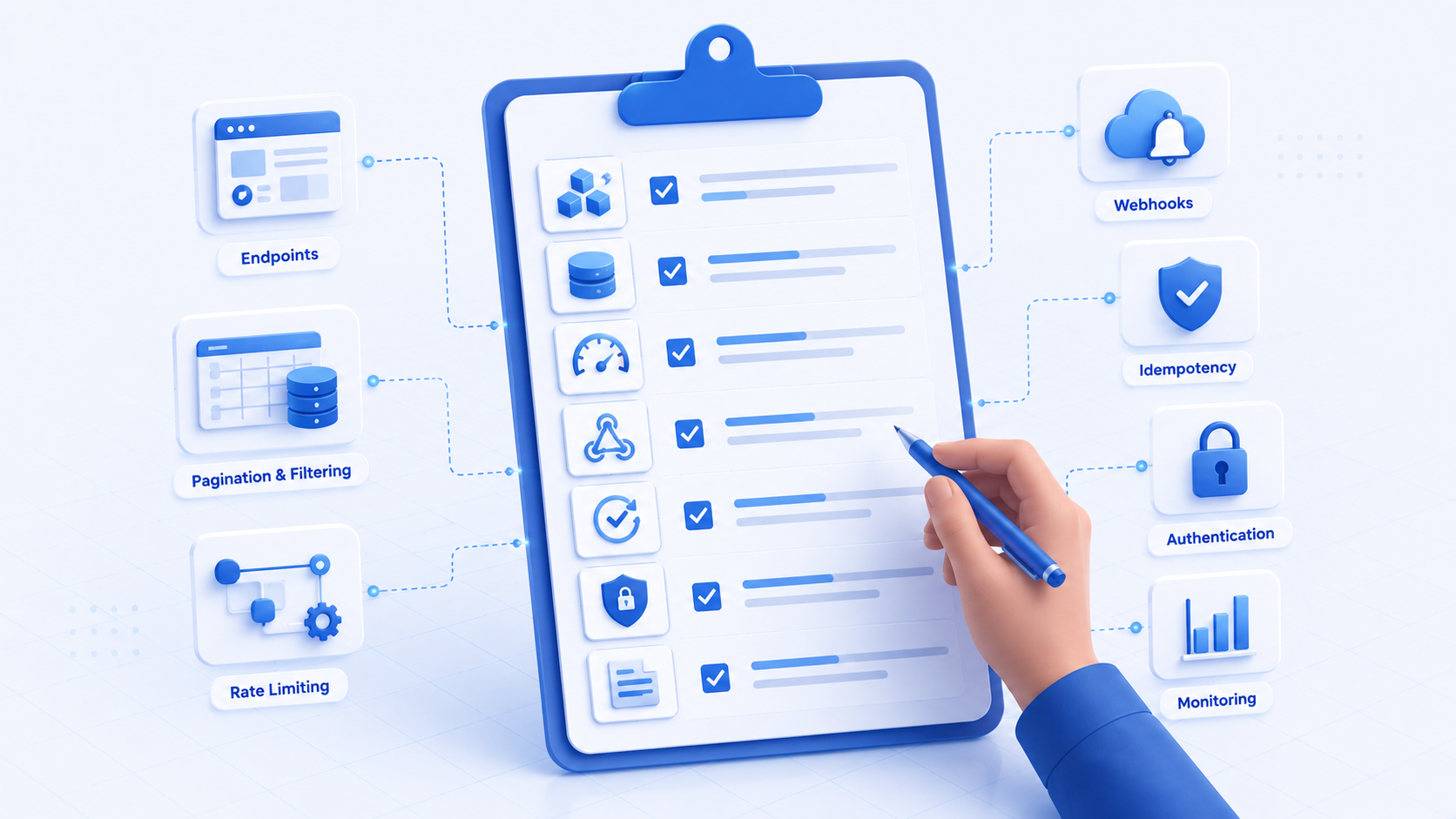
Pre-launch API checklist (summary)
| Area | Must have | Nice to have |
|---|---|---|
| Documentation | OpenAPI from serializers | Interactive sandbox |
| Auth | Scoped tokens + rotation | OAuth2 provider |
| Reliability | Idempotent writes | Webhook retry dashboard |
| Performance | Cursor pagination | Field sparse selection |
| Ops | Rate limits + trace IDs | Partner status page |
GraphQL instead of REST?
GraphQL fits some mobile clients; REST with OpenAPI remains easier for many B2B partners to integrate. We choose per audience.
How do we version without pain?
Prefix paths with /v1/ and maintain parallel serializers during migration windows - never break v1 silently.
Are DRF viewsets enough?
Viewsets accelerate CRUD; complex partner flows often need explicit APIViews with tailored validation and error codes.
What do mobile teams request most?
Stable pagination, predictable error codes, smaller payloads, and sandbox keys that mirror production behavior.
Launching mobile or partner integrations? Review our API case studies and schedule an API review.