
Key takeaways
- Django still excels at B2B domain complexity and admin-heavy products
- Pair Django APIs with React - avoid mixing SPA logic into templates
- Multi-tenant row-level patterns fit most early B2B SaaS products
- Defer microservices until metrics justify independent scaling
- Contract-first APIs keep web and mobile teams aligned
- Choose based on roadmap - AI and enterprise features favor Django
Article content
The question every SaaS founder asks in 2026
React frontends and API-first backends dominate SaaS discourse. Django sometimes gets labeled as a monolith relic - fine for admin panels, less suited for multi-tenant B2B products with mobile clients and partner integrations. That narrative is outdated. SparkScribe ships B2B SaaS on Django for US and UK clients because it still delivers faster time-to-value, stronger security defaults, and lower operational complexity than many greenfield microservice stacks.
The better question is not whether Django is relevant in 2026, but whether your team can execute a clean separation between domain logic, APIs, and frontends - regardless of framework fashion.
Where Django wins for B2B SaaS
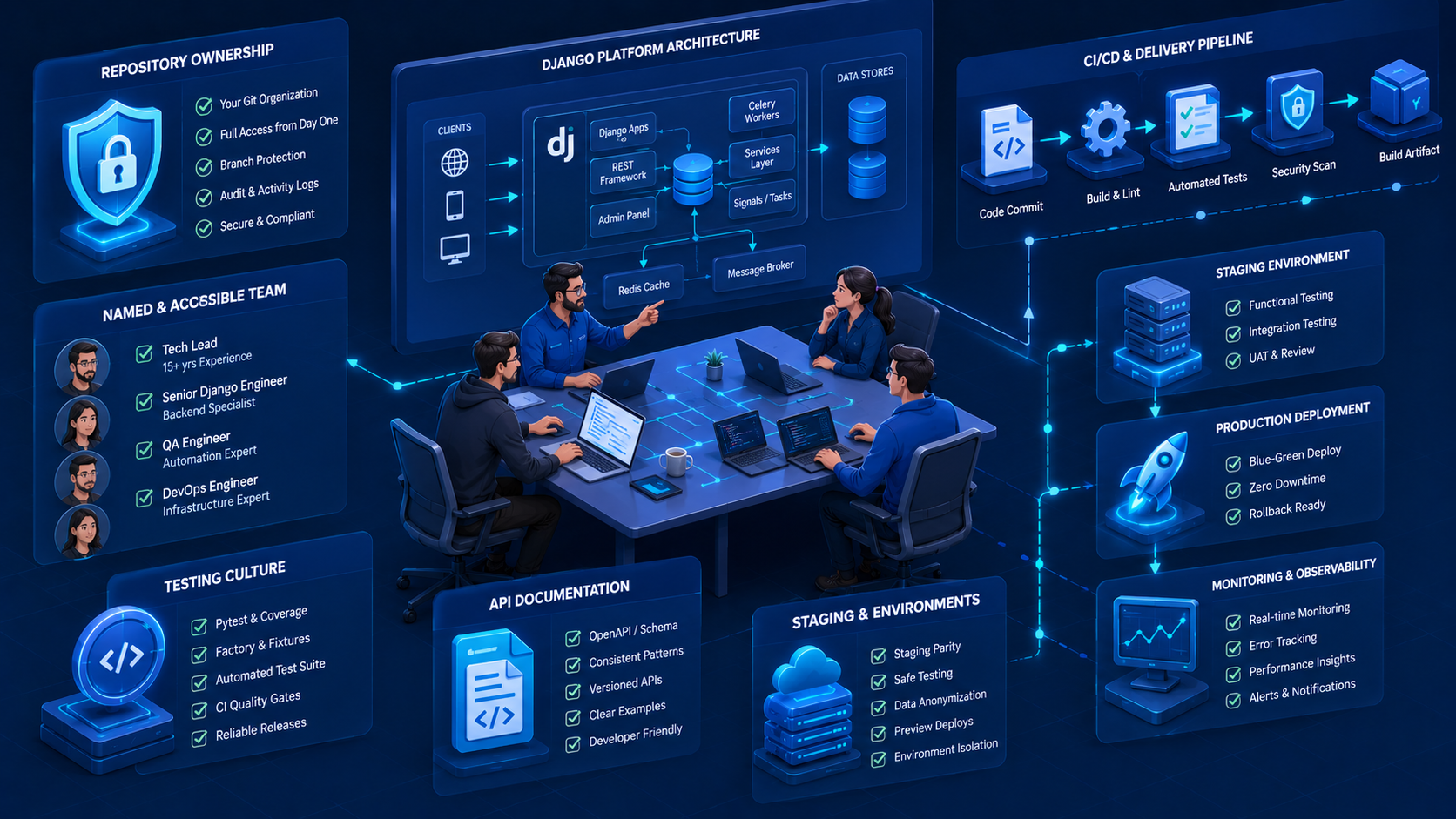
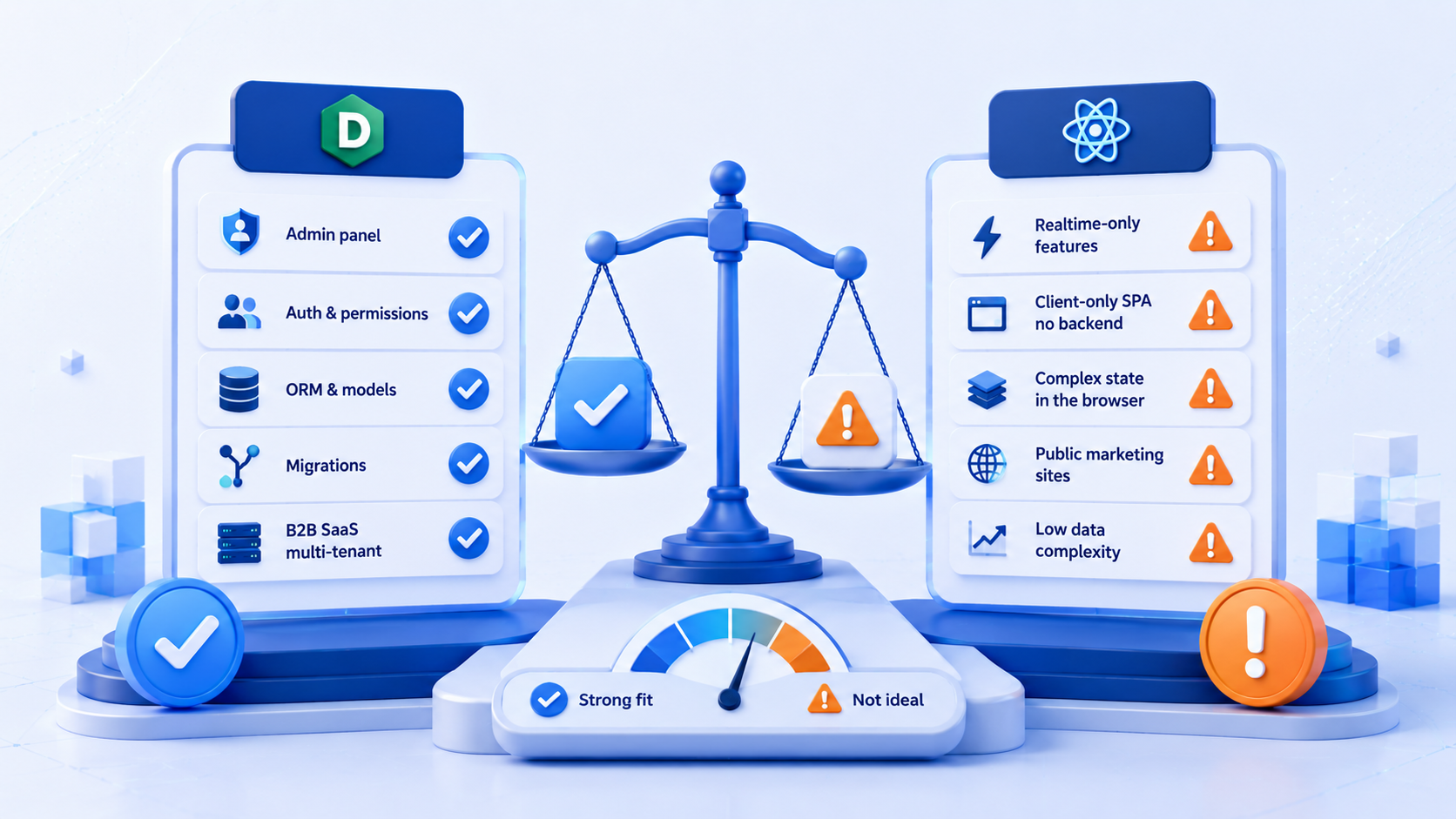
Django gives you auth, permissions, admin, migrations, and ORM depth in one cohesive package. For early-stage SaaS, that means billing hooks, team invitations, audit logs, and support tooling without assembling ten libraries. Multi-tenant patterns - schema-based, row-level, or hybrid - are well documented and battle tested.
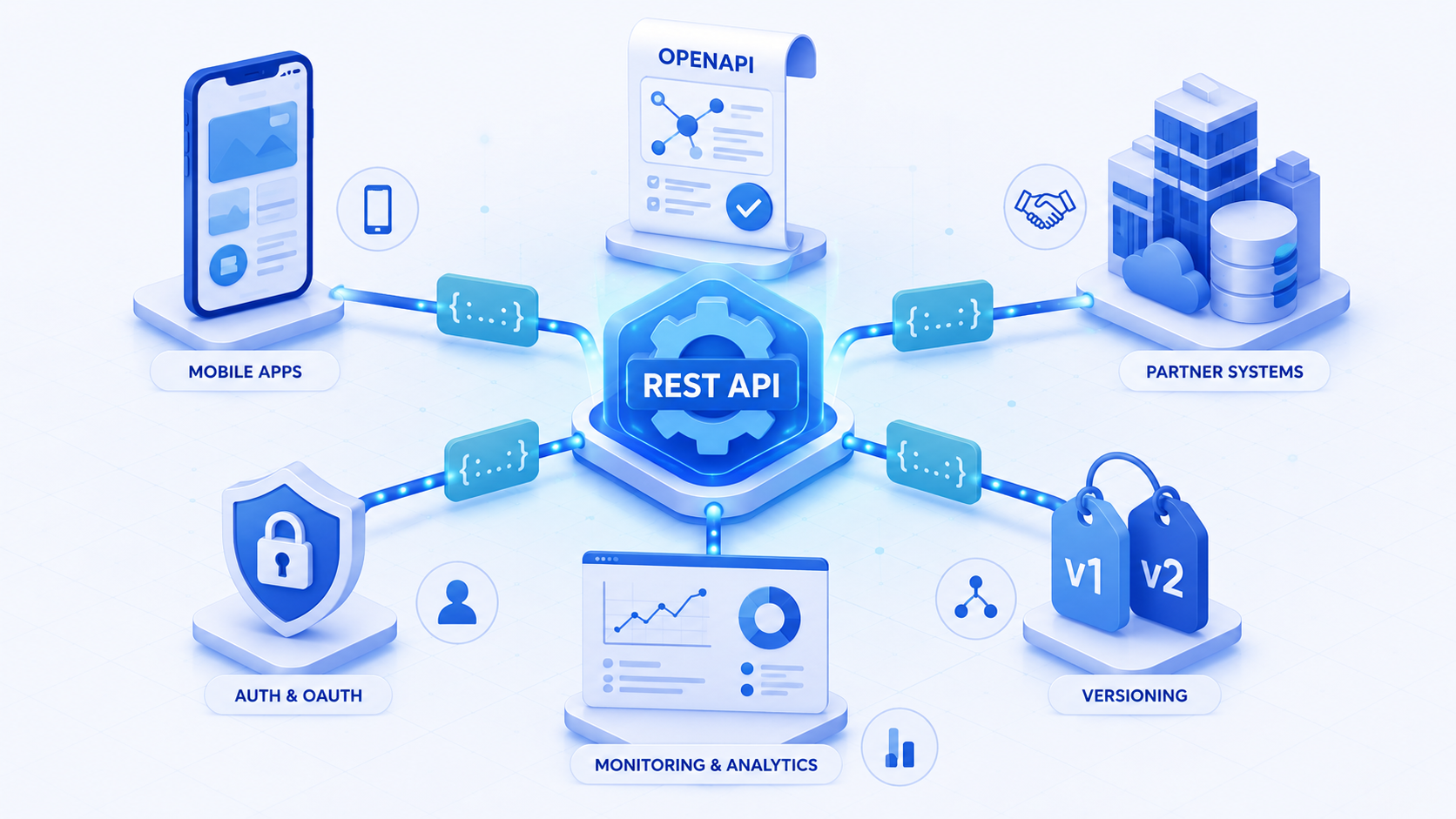
Django REST Framework or Ninja pairs cleanly with React, Next.js, or React Native clients. Serializers enforce contracts; OpenAPI schemas keep mobile and web teams aligned. Celery handles webhooks, report generation, and email at scale without blocking request threads.
Where teams feel friction - and how we address it
- Real-time features: Django Channels or a dedicated websocket service covers live notifications and collaborative editing when needed.
- Heavy read scaling: Read replicas, caching, and selective denormalization usually suffice before splitting services.
- Frontend velocity: Contract-first APIs and typed client SDKs prevent backend releases from blocking UI sprints.
- Perceived monolith risk: Modular Django apps with strict import boundaries migrate to services later if metrics justify it - most B2B products never need the split.
Django plus React in practice
Our typical B2B SaaS architecture places React on Vercel or CloudFront, Django APIs on AWS or Railway, PostgreSQL as system of record, Redis for cache and queues, and S3 for assets. Authentication uses JWT or session cookies with CSRF protection for browser clients and scoped tokens for mobile.
We avoid embedding React inside Django templates for core product flows - separation keeps deploy pipelines independent. Django admin remains the operator console for support and success teams, often jazzed up with custom dashboards.
Comparison with Node-only or serverless stacks
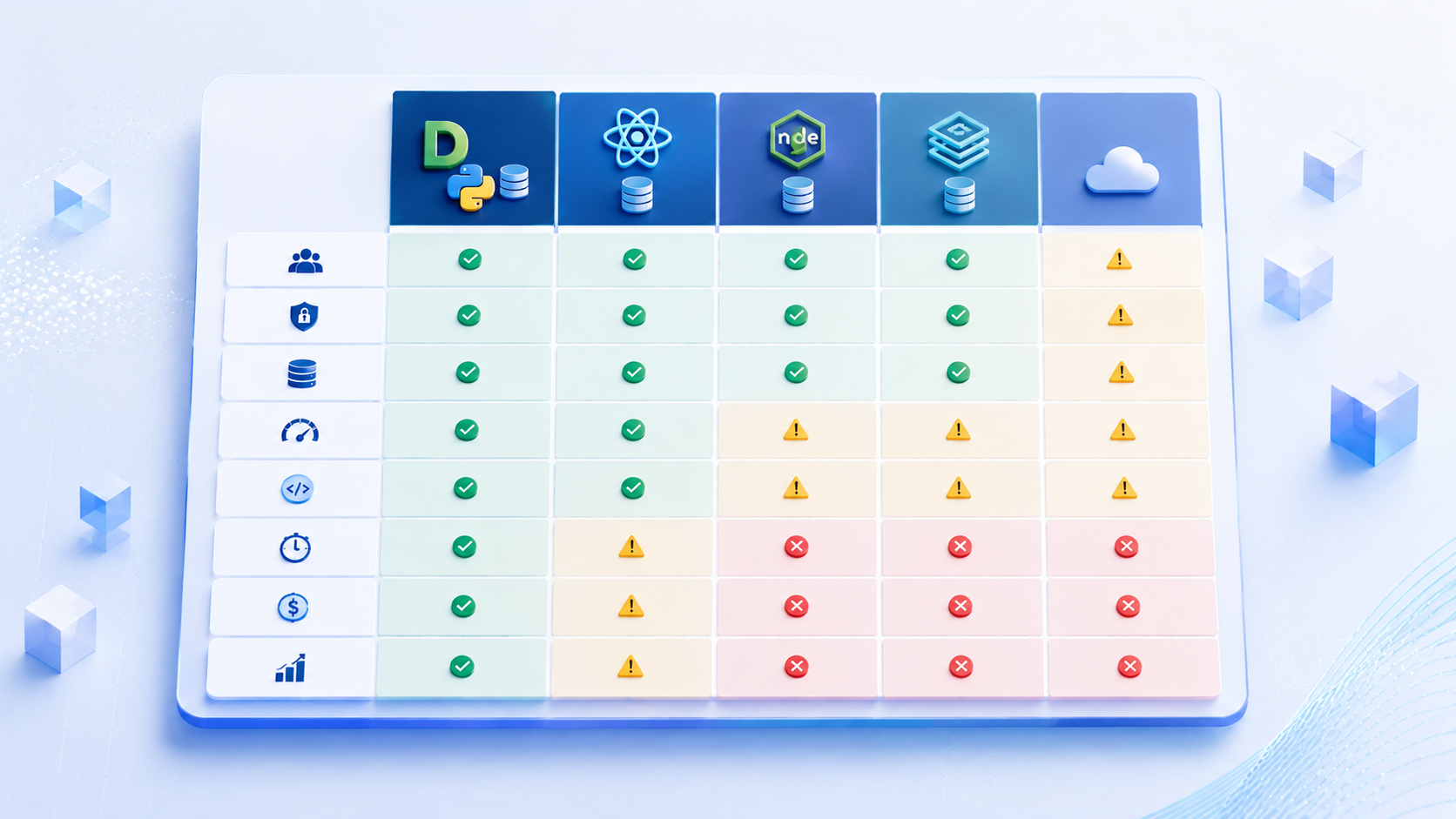
Node excels when your team is entirely JavaScript and your domain is thin. Serverless fits spiky, simple workloads. Django wins when your product has rich domain rules, compliance requirements, complex permissions, and long-lived data relationships - common in B2B SaaS for finance, healthcare adjacency, logistics, and professional services.
Total cost of ownership includes engineer hiring, not just hosting bills. Strong Python and Django talent pairs well with data and AI roadmaps many SaaS products add in year two.
Signs Django is the wrong fit
Django is not universal. Ultra-low-latency trading, massive realtime fanout, or teams committed to a TypeScript-only stack may choose differently. If your MVP is mostly CRUD with minimal business logic, lighter frameworks can be faster - until complexity arrives.
Be honest about roadmap. If AI features, complex workflows, or enterprise SSO land within twelve months, Django's ecosystem often pays back the initial setup cost.
Our recommendation for 2026 founders
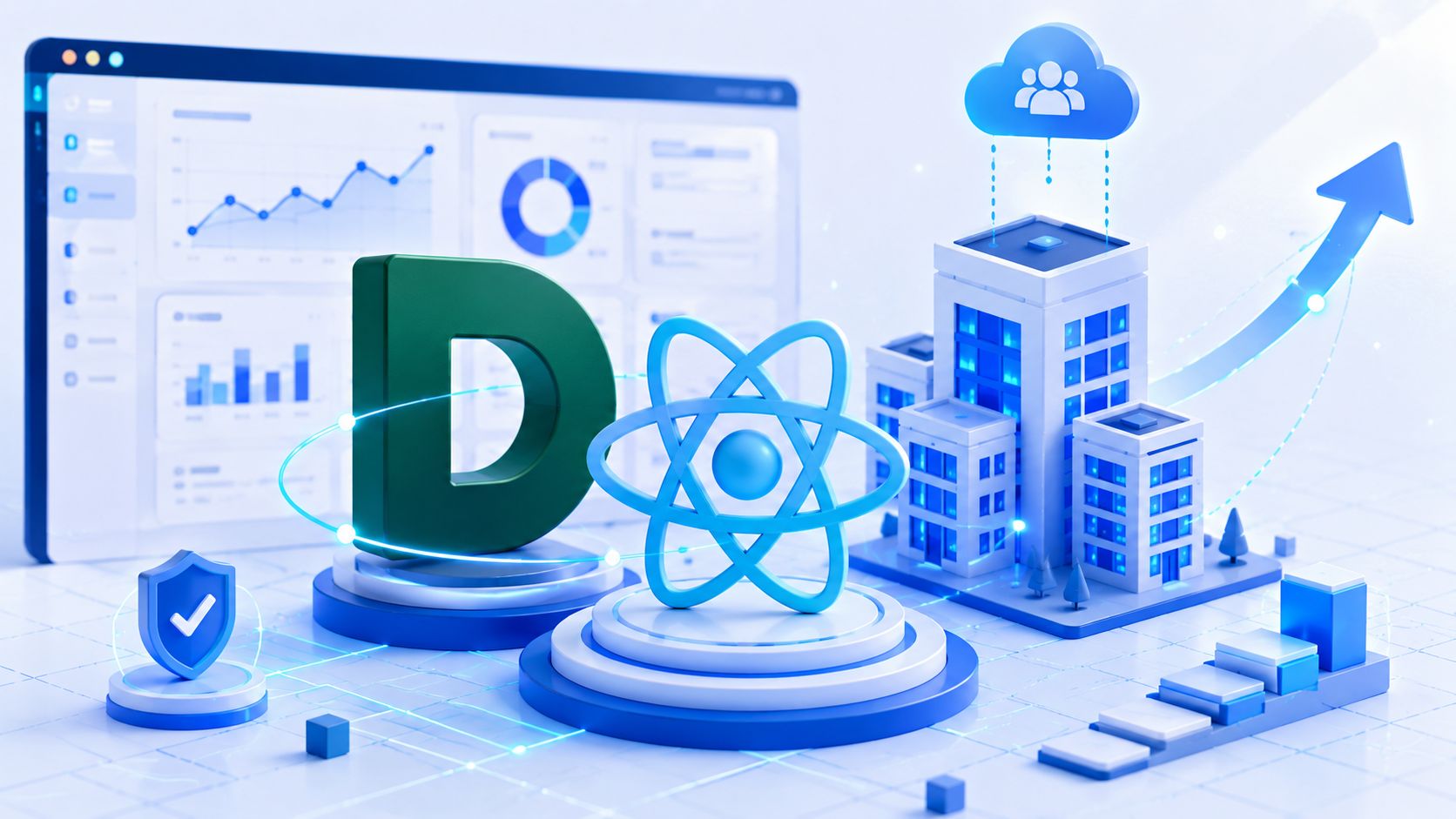
Choose Django for B2B SaaS when domain complexity, admin needs, and security matter more than framework hype. Pair it with a modern React SPA, invest in API contracts, and defer microservices until metrics force your hand.
SparkScribe helps US and UK startups validate architecture before committing runway. Explore our Django development and custom software services or compare approaches on recent case studies.
Migration paths when you outgrow the monolith
Some B2B products eventually extract high-throughput subsystems - search, billing webhooks, analytics pipelines - into dedicated services while Django remains the authority for users, permissions, and core domain events. Event outbox patterns and clear bounded contexts make that transition incremental. Founders worry prematurely about Netflix-scale architecture; most SparkScribe clients below Series B benefit more from disciplined modular monoliths than premature service sprawl.
Invest in integration tests at API boundaries early. When you do split a service, those tests become the contract both sides trust. React clients should consume versioned APIs so backend evolution does not require synchronized big-bang releases across web and mobile teams.
Security and compliance defaults
Django's CSRF protection, password hashers, and middleware ecosystem reduce baseline security work compared to assembling Node middleware from scratch. For B2B buyers asking about SOC 2 readiness, structured audit logs, role-based admin, and environment separation map cleanly onto Django conventions. Document these choices in your security appendix during enterprise sales - they matter as much as feature checklists.
Total cost of ownership over five years
Framework debates ignore maintenance - hiring, hosting, dependency upgrades, and security patches accumulate. Django's LTS release cycle and large community reduce bus-factor risk for teams without a hundred-person platform group. When comparing quotes from Node-only shops and Django specialists, ask how each handles major version upgrades and long-term dependency hygiene.
SparkScribe clients frequently add AI features in year two on the same Django core - unified auth, billing, and admin accelerate those expansions compared to stitching new services onto a fragmented MVP stack chosen for speed alone.
Further reading

Django is not anti-modern - it is pro-shipping. The teams that struggle are those that treat Django as a template engine instead of a domain-driven API platform.
Should we use Next.js instead of Django for SEO?
Use Next.js for marketing sites; keep product APIs on Django. SSR for authenticated SaaS dashboards is rarely worth the complexity early on.
How do we structure multi-tenancy?
Row-level tenant IDs with middleware enforcement work for most B2B products. Schema-per-tenant is reserved for strict isolation requirements.
Is Django async enough in 2026?
For typical B2B API workloads, yes - especially with Celery for slow tasks. Profile before rewriting around ASGI.
When do you recommend splitting services?
When a subsystem has independent scaling needs, release cadence, or team ownership - not because microservices sound mature.
Planning a B2B SaaS build? Book a architecture call with our Django and React delivery team.